The silver wattle (Acacia dealbata) is one of the most challenging invasive species for nature conservation in Portugal, particularly in the Central and Northern regions. Its capacity for rapid expansion, abundant germination, and vigorous sprouting from roots and stumps makes its control difficult, demanding, and often ineffective when relying solely on conventional techniques.
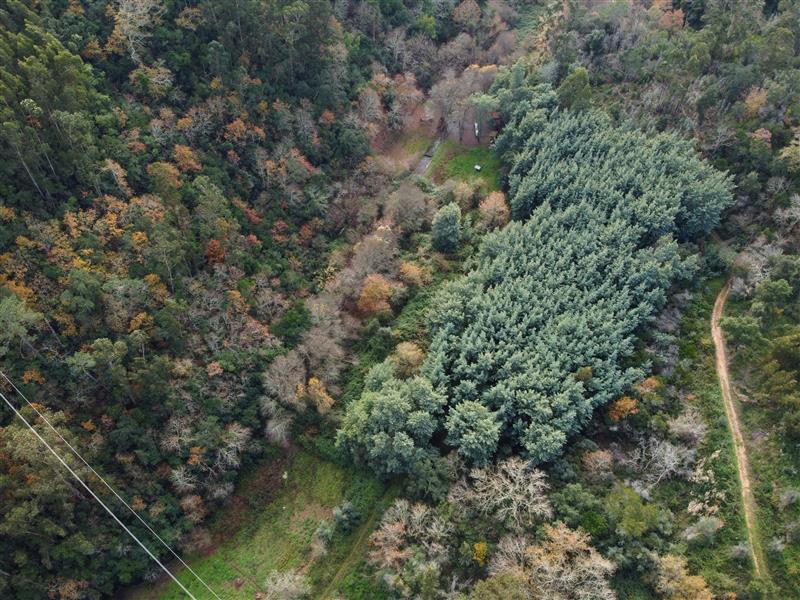
At the Senhora da Alegria Bio-Reserve in Almalaguês, Milvoz is developing a pilot project dedicated to controlling this invasive species and ecologically restoring an area heavily impacted by its presence. More than just removing wattles, we want to understand which methods work best on the ground, which are most sustainable, and which can help give space back to spontaneous vegetation and native species.
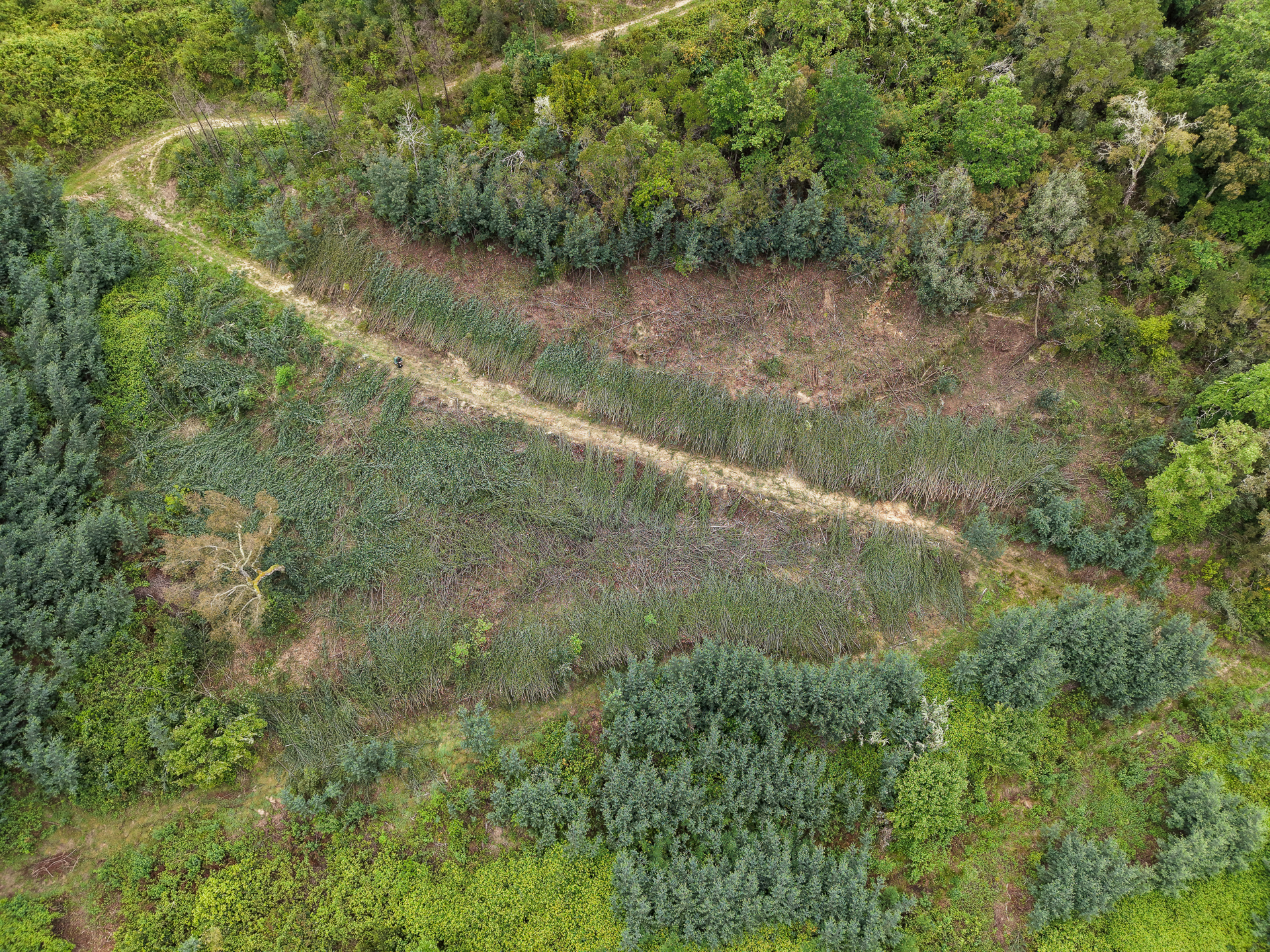
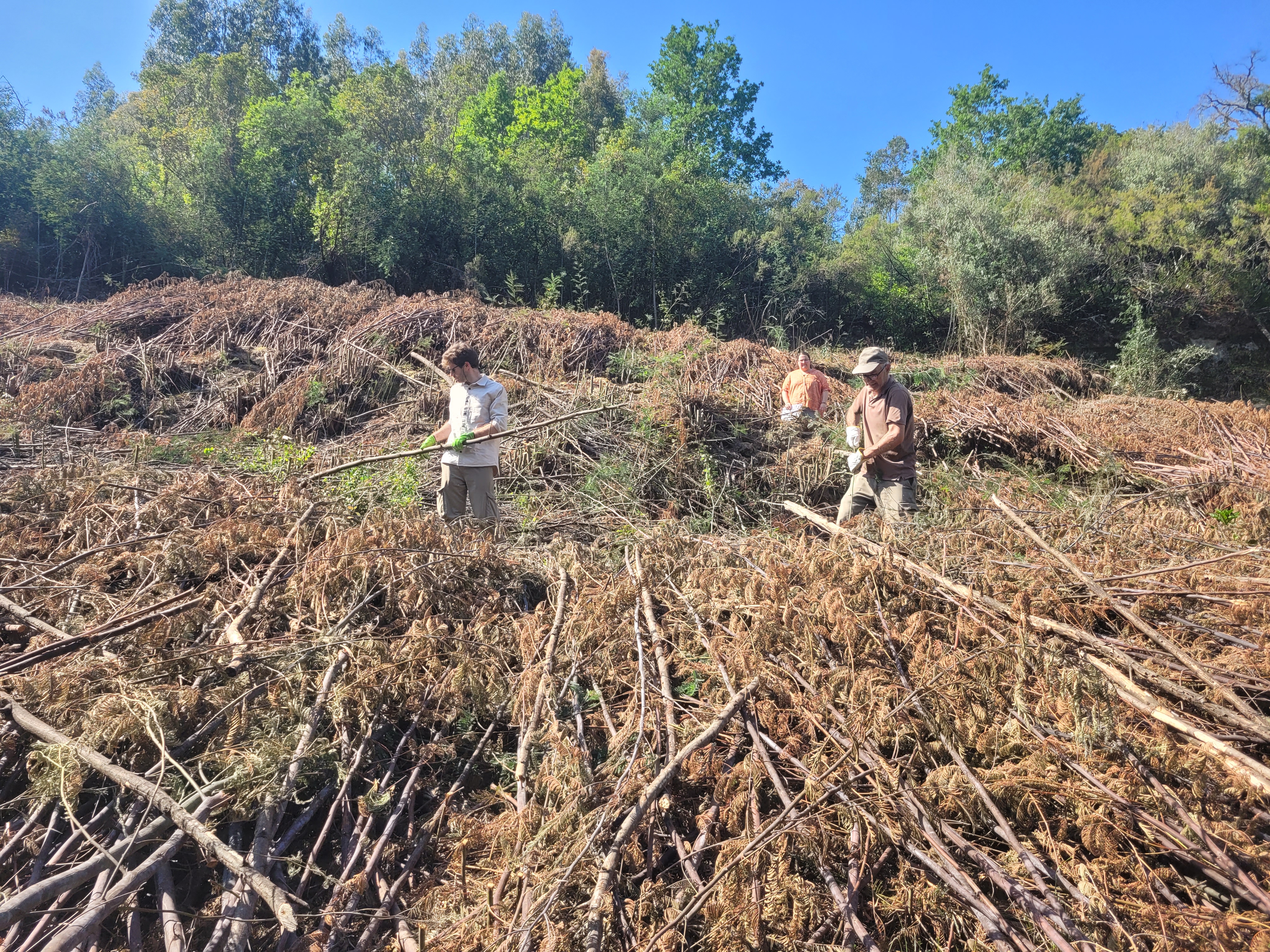
This project, carried out in partnership with Mossy Earth, tests different approaches to controlling Acacia dealbata, comparing their effects over time. Among the methods under evaluation are thermal control (heat treatment), mulching with acacia wood chips, a combination of these techniques, and different cutting regimes. The goal is to understand how each treatment influences germination, sprouting, and the area's natural regeneration capacity.
The work is being conducted through experimental plots set up in two distinct zones of the Bio-Reserve: one dominated by germination from the existing soil seed bank, and another where the primary challenge is sprouting from stumps and shallow roots. This distinction is crucial, as areas invaded by acacia typically present both problems, requiring tailored responses for each situation.
Throughout the project, Milvoz will regularly monitor the evolution of the plots, recording the number and height of new acacias, the presence of sprouts, and the emergence of other spontaneous plants. This monitoring will make it possible to evaluate not only the effectiveness of the applied methods but also the response of native vegetation and the area's potential for natural recovery.
In the long term, this work is part of Milvoz's vision for the ecological recovery of the Senhora da Alegria Bio-Reserve. The objective is to progressively transform areas dominated by acacia into richer, more diverse, and resilient habitats, favoring the regeneration of native species and creating better conditions for biodiversity.
The results of this project will be important not only for Milvoz but also for other entities, landowners, technicians, and conservation projects facing the same issue. Based on this hands-on experience, we aim to contribute to the creation of practical guidelines that can be replicated in other natural areas affected by acacia invasions.
Because controlling invasive species is not just about cutting down trees—it is also about learning how to restore ecosystems, recover natural processes, and bring a future back to these lands.