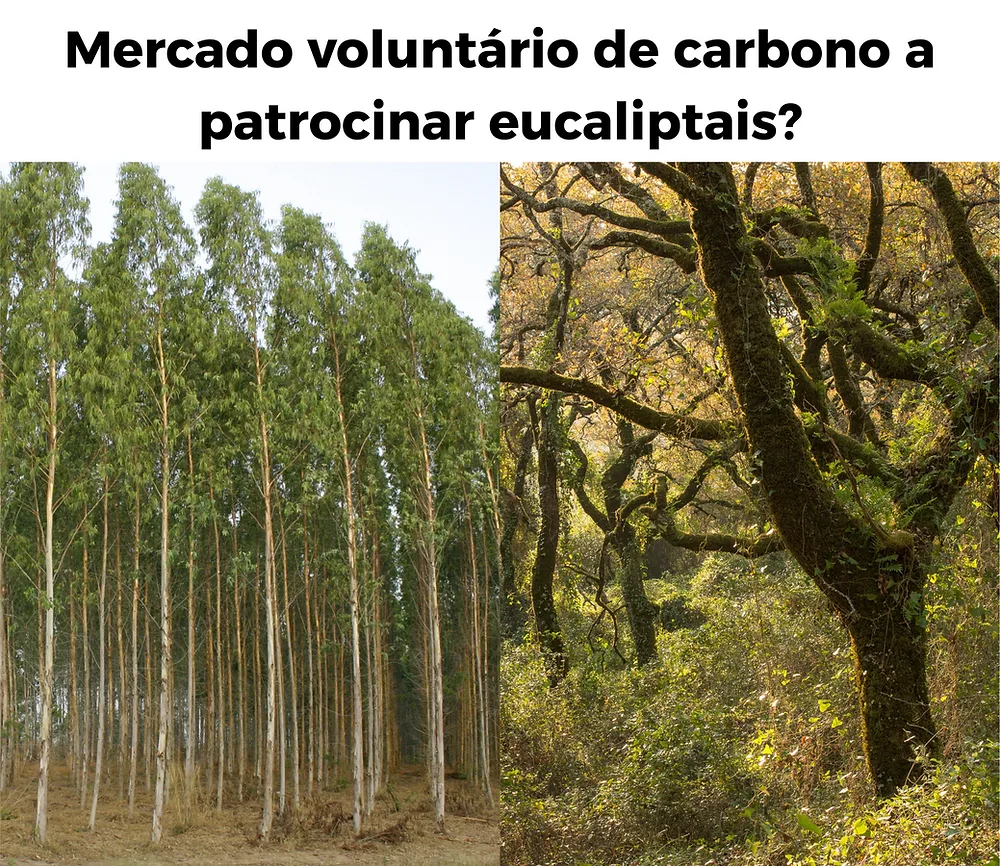
What we feared is about to happen: Portugal's voluntary carbon market, currently being established, is at serious risk of being entirely captured by the promotion of eucalyptus monoculture — without limits!
 The first methodology proposed to certify carbon credits in Portugal, currently under public consultation, does not address the structural problems of the forestry sector and could worsen the complex challenges facing rural territories. Instead of promoting ecological regeneration and multifunctional land use, the proposal favours intensive forestry exploitation models — the very ones that have contributed to the degradation of inland areas and biodiversity loss.
Within the scope of this public consultation, we wish to express our concern, as this methodology fails to align with national objectives and ignores lessons learned from similar projects in other countries. We highlight four critical points:
- Permissiveness regarding exotic monocultures without economic necessity
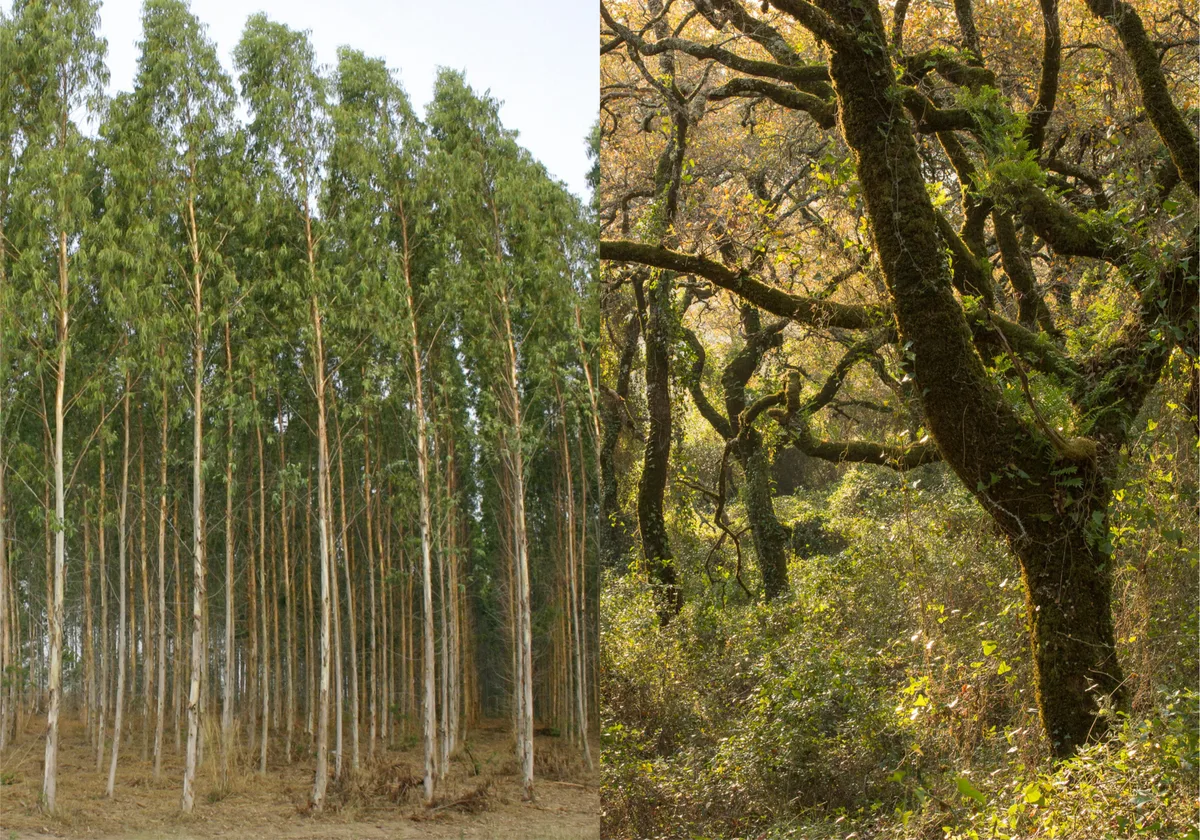
The planting of exotic species in monoculture for carbon credits is permitted without clear restrictions. This approach ignores evidence that such plantations have caused serious ecological and social impacts — as has already occurred in Brazil, Chile, Uruguay and South Africa — leading to major scandals that have undermined the very credibility of these mechanisms.
International standards, such as the Gold Standard, have adapted their methodologies and introduced stricter criteria to prevent the approval of systems based on fast-growing monocultures, particularly those using exotic species such as eucalyptus.
- Incoherent and permissive permanence criteria
The proposal allows timber harvesting during the permanence period (30 years), provided replanting takes place. This undermines the concept of "permanence", which is essential to the credibility of carbon credits. Recognised international standards such as Plan Vivo or the Gold Standard do not permit this type of exploitation.
It is important to note that only a limited set of species, such as eucalyptus, is suited to cutting cycles within this period — which reveals the true intention of the methodology: to reinforce the current forestry model based on fast-growing monocultures, ignoring their cumulative impacts on soil impoverishment and long-term sustainability.
- Undervaluation of ecological complexity and co-benefits
There is no incentive whatsoever for the use of native species, nor for the promotion of complex (agro)forestry systems. The understorey is excluded from carbon calculations.
Instead, the proposal reinforces the idea of "clean, well-managed forests", perpetuating fast-growing monocultures with low ecological and social benefits, further homogenising the rural landscape.
- Misalignment with national and European policies
The proposal contradicts commitments made by Portugal under the European Green Deal, the European Nature Restoration Law and the National Strategy for Nature Conservation and Biodiversity. It ignores the objectives of diversifying forestry and reducing dependence on monocultures, threatening to do exactly the opposite.
This instrument, which should be an opportunity to regenerate Portuguese forests, may end up cementing unsustainable models and mortgaging the country's ecological future.
👉 It is essential to share and participate in this public consultation! We have less than 15 days to act! https://participa.pt/pt/consulta/metodologia-de-carbono-sobre-novas-florestacoes-mercado-voluntario-de-carbono