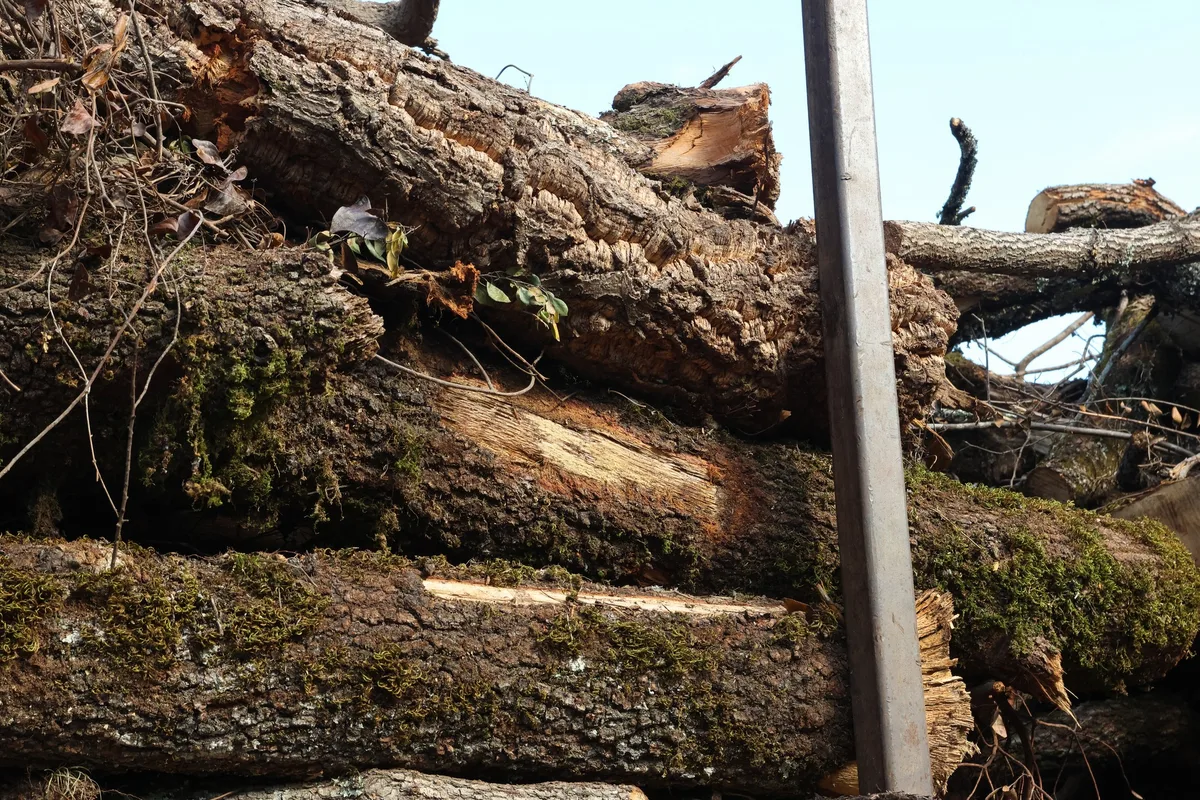
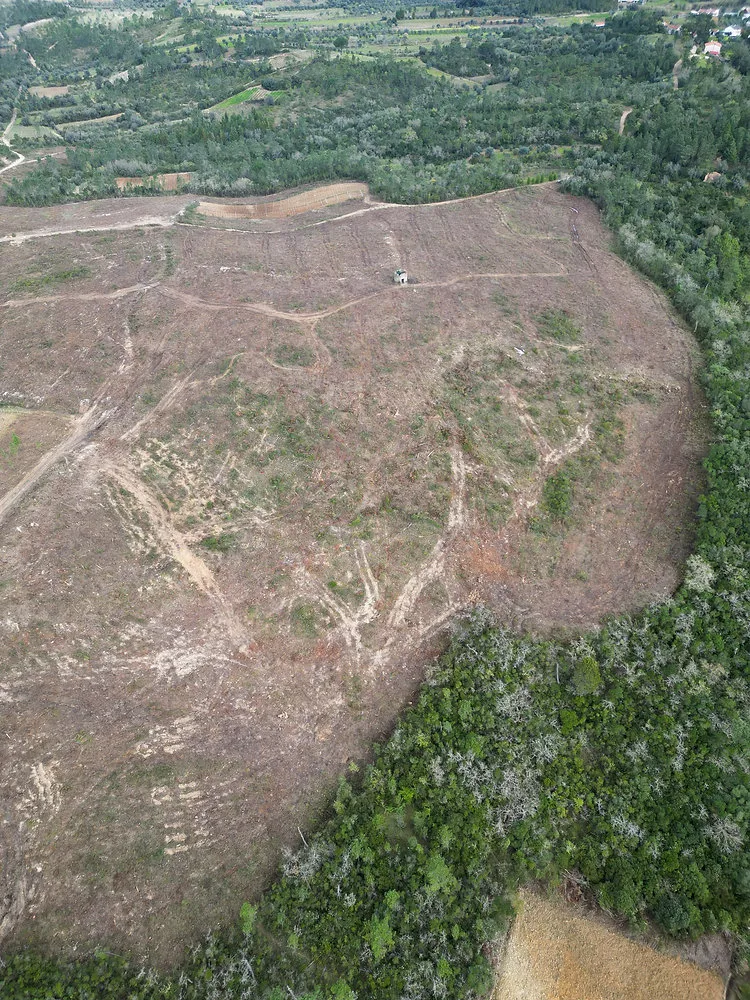
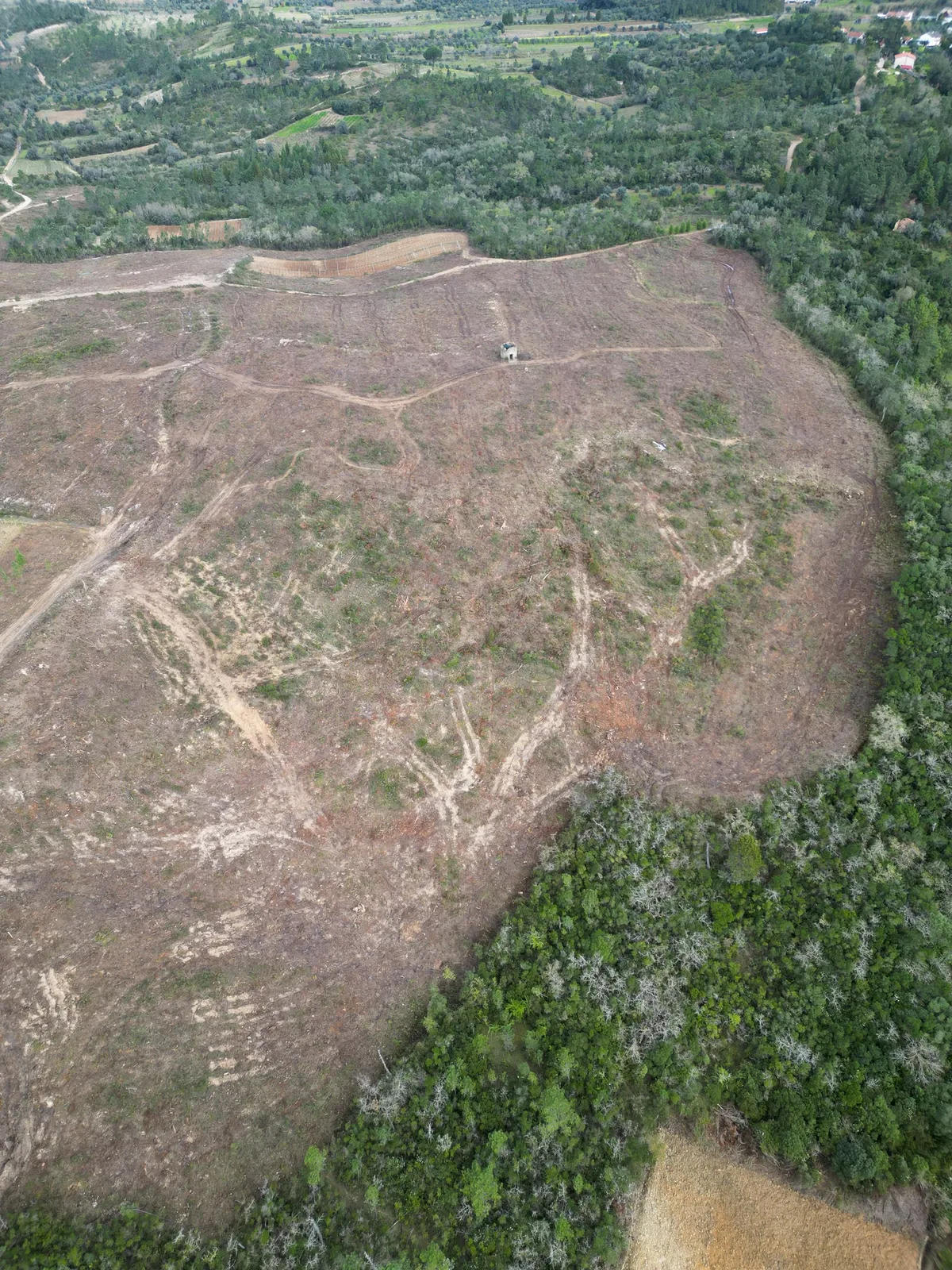
 An extensive 12-hectare area of valuable woodland composed of oak, strawberry trees and mock privet has been completely devastated. Located between the settlements of Larçã and Botão, this was a forested area of high ecological value, both for the diversity of native species present and for its state of conservation. For these reasons, and also because of the network of trails running through it, the area was cherished by local communities and regularly visited for walking and outdoor sports. Even though of great importance to the community and for environmental conservation, nothing appears to have prevented its total destruction in a short space of time. By the time Milvoz became aware of the situation, there was nothing left to save. From what we were able to ascertain, the intervention is intended for a vineyard cultivation project, a hypothesis we are still investigating.
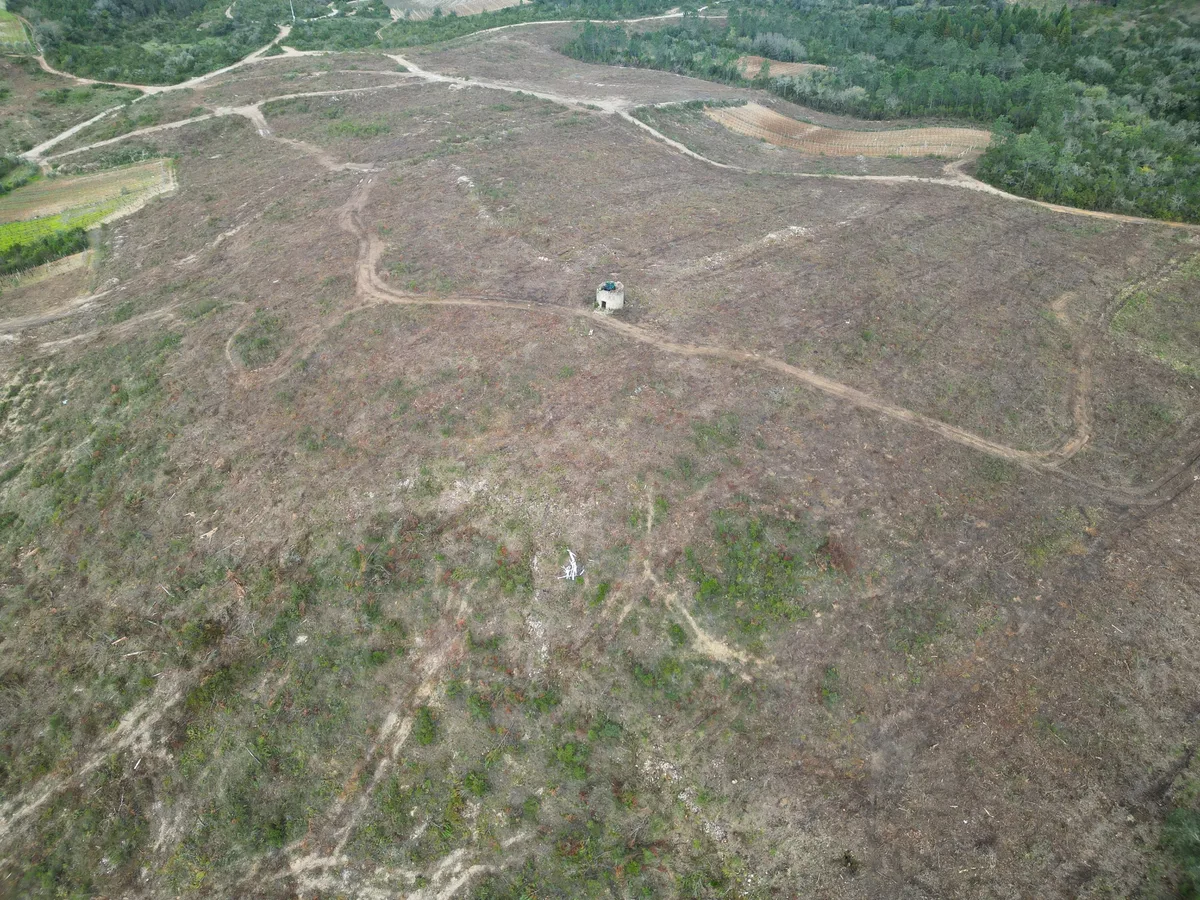 Following the photovoltaic plant at Serra do Ilhastro, Souselas now hosts the environmental destruction of yet another biodiversity hotspot. This woodland was a true jewel set within a surrounding landscape of severe forest ecosystem degradation, surrounded by extensive eucalyptus monocultures, and represented one of the most precious examples of the plant cover characteristic of the calcareous soils north of the city of Coimbra. It therefore harboured a set of species that are becoming increasingly rare in the region and that stand as an important testament to the vegetation cover of the past. Unfortunately, sites of high ecological value in the surroundings of Coimbra continue to face serious threats, and this case is yet another perfect example to add to many others.
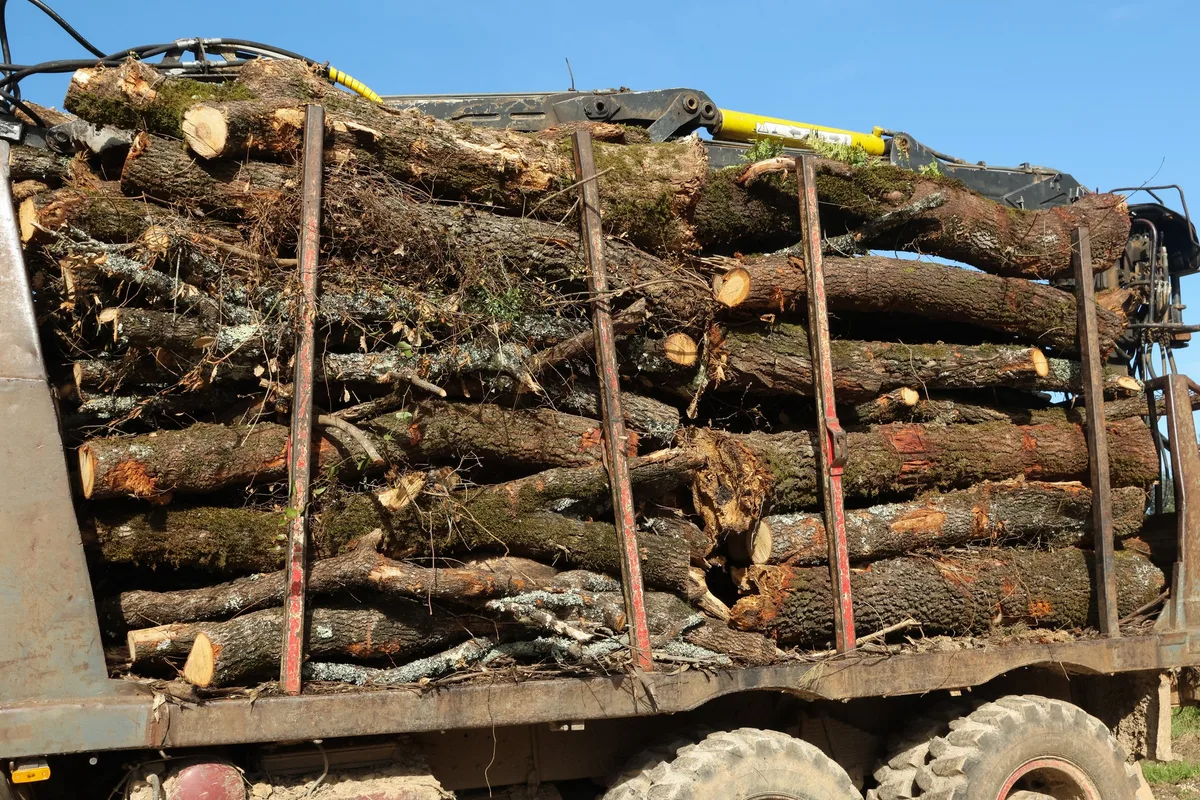 Although identified by Milvoz to the Coimbra Municipality as an area of high ecological interest, the slow progress in implementing the Municipal Micro-Reserve Network project continues to jeopardise the conservation of these last natural refuges, which month by month, year by year, are decreasing in number, shrinking in area and becoming more ecologically degraded. It is for this reason that advancing the protection of this and other identified sites is so urgent.
Milvoz confirmed on the ground the felling of at least two large cork oak trees and has submitted a report to SEPNA/GNR to investigate the legality of the felling and of the broader intervention.