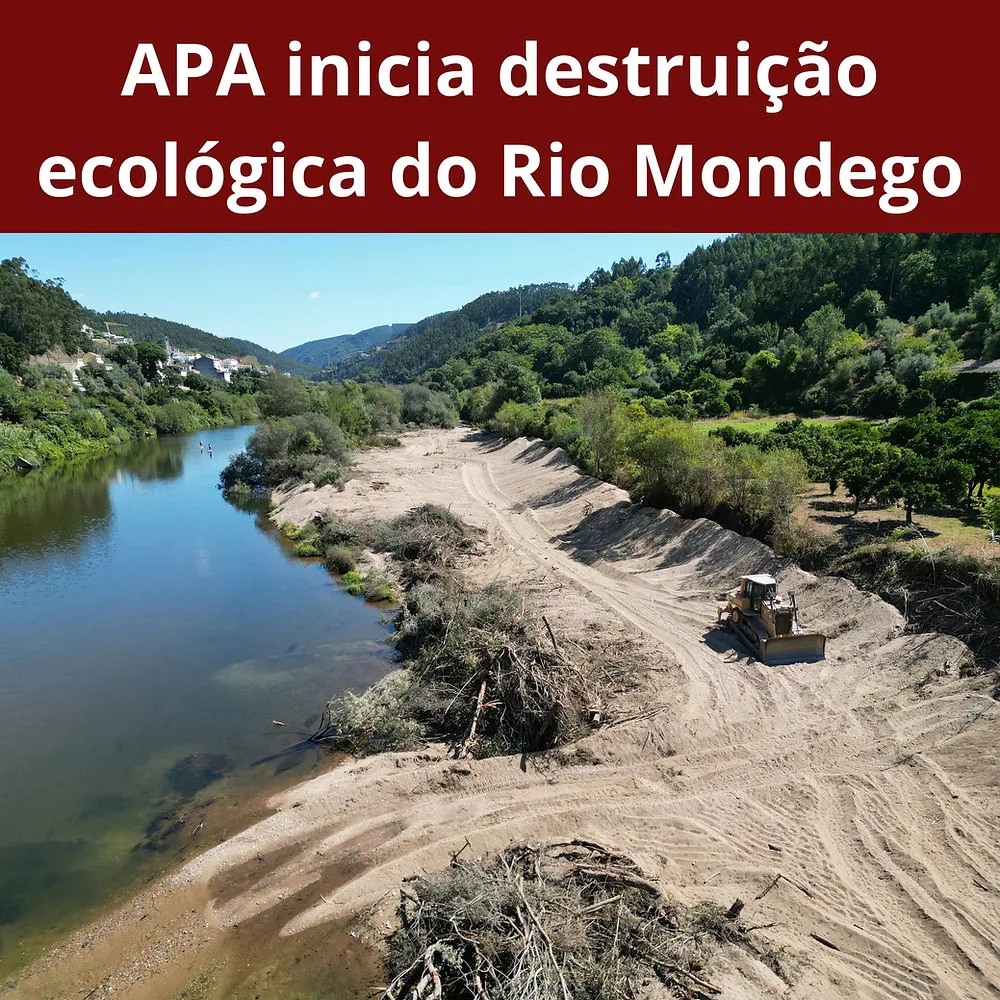
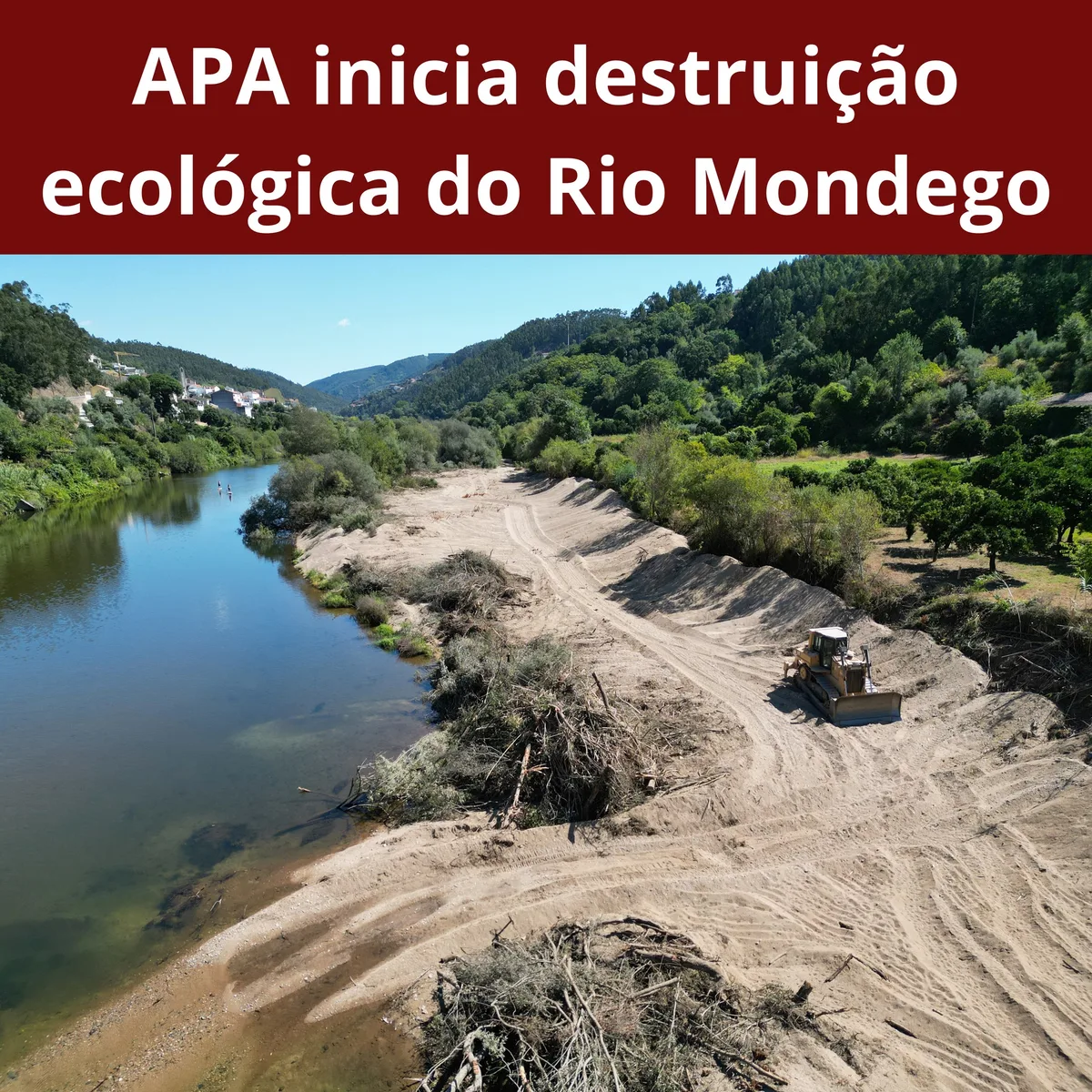
 Last Thursday, works began on the bed and banks of the Mondego River between the Portela bridge and the Palheiros weir, as designed by the Portuguese Environment Agency. Among the planned actions is the intervention on the riparian vegetation along 3 kilometres of riverbank, removing any tree within or overhanging the riverbed, the straightening of the river course with removal of sandbanks and their riparian woodland, as well as the rip-rapping of a 350-metre section of riverbank.
The planned intervention, whose approach is purely hydraulic, ignores the entire ecological component of the riparian woodlands established over recent decades, which shelter a highly significant range of biodiversity within an already heavily degraded surrounding landscape in terms of forest cover. Beyond the foreseeable and immediate loss of biodiversity in this section of the river, the projected interventions could act as a colonisation and future expansion hub for invasive exotic species such as acacias, tree of heaven or giant reeds, taking advantage of the disturbed niches that will become available. Additionally, the colossal volume of sediment accumulated in the sandbanks and riverbanks will be unlocked and carried by the current towards the city of Coimbra and the weir immediately downstream, accelerating the need for dredging operations on which several million euros have recently been invested.
Milvoz condemns this intervention, particularly with regard to the failure to incorporate ecological criteria on the part of an institution that should be exemplary in its conduct — and which, moreover, manifestly contradicts the very good practices it advocates to citizens. Expecting prudence and good judgement in the execution of the works, Milvoz is prepared to act should the destruction of the natural heritage of this stretch of the Mondego River be confirmed, and appeals to citizens to voice their concerns and remain vigilant as the works progress.