Updated: 23 Jan 2022
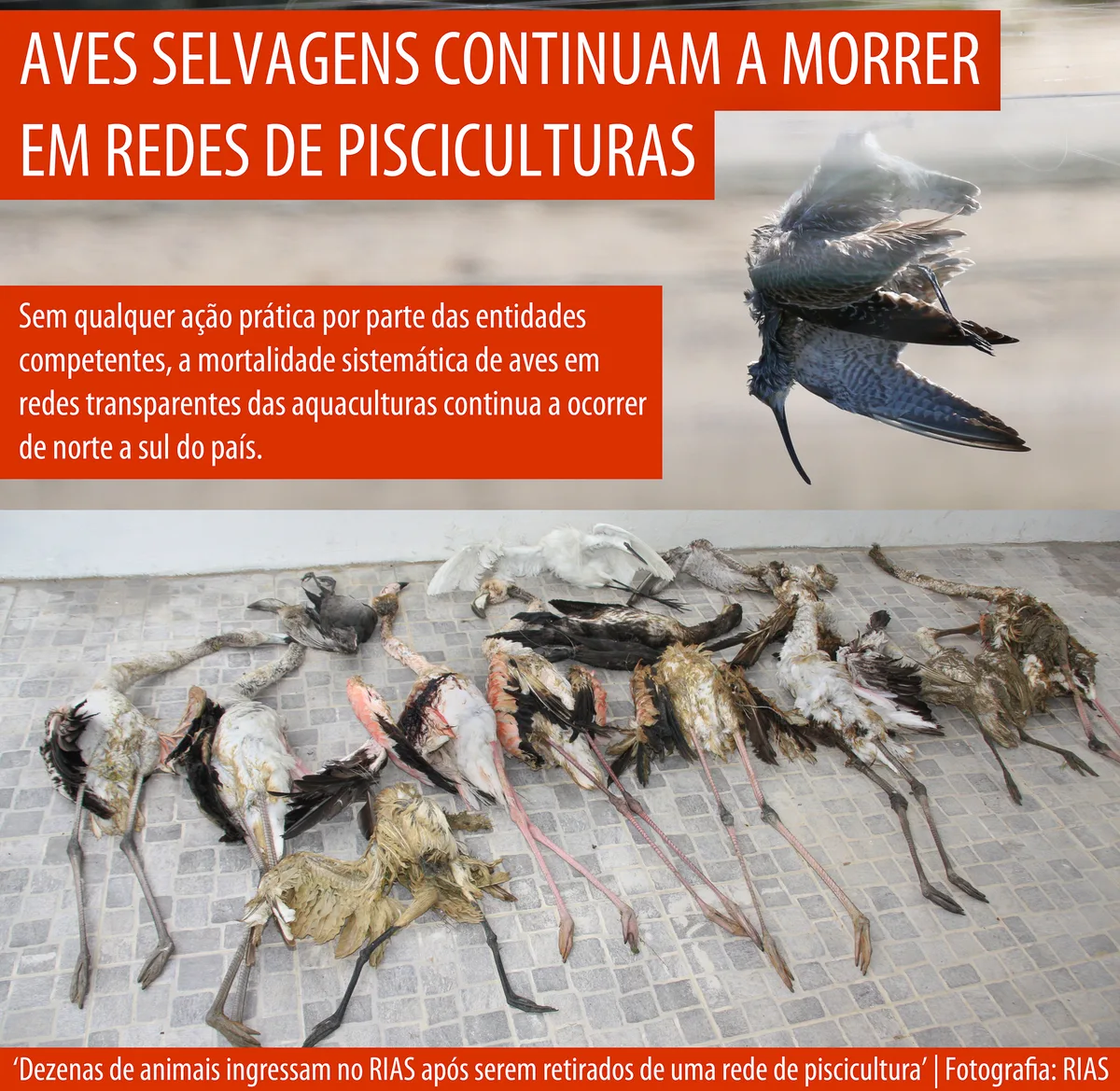
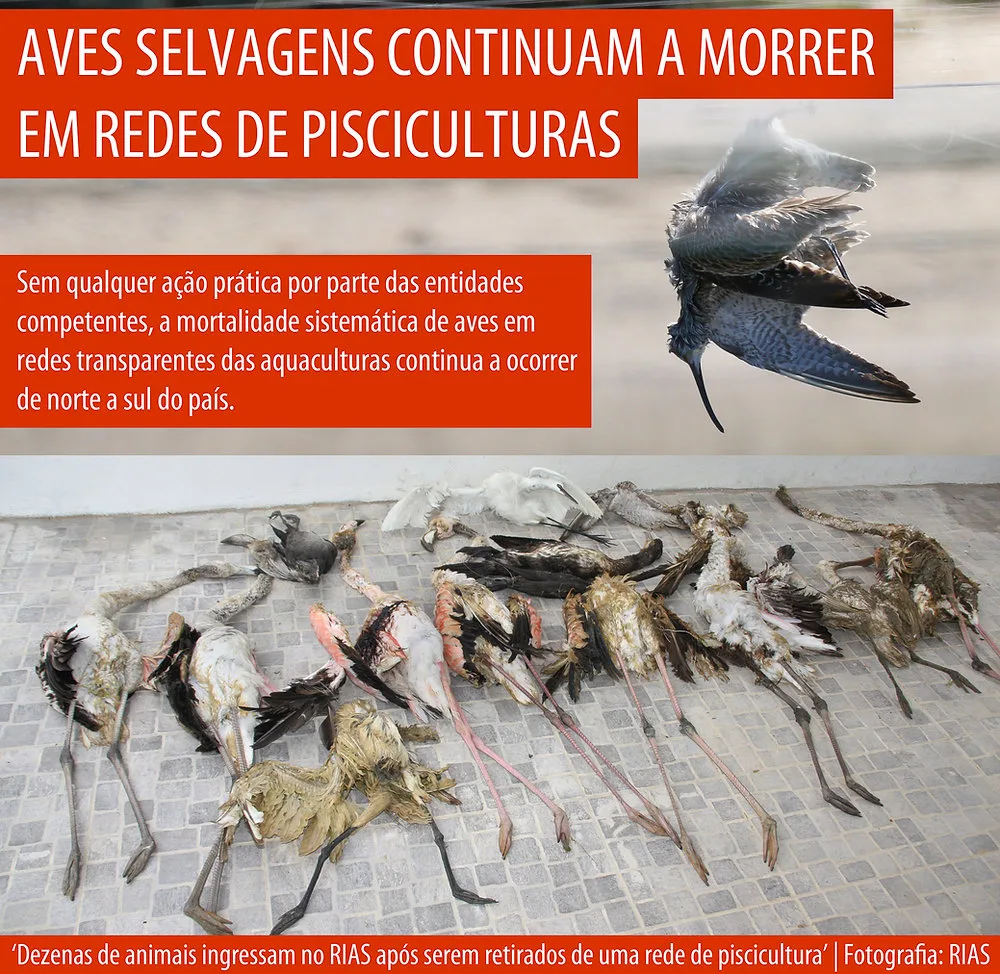
Without any practical action from the competent authorities, the systematic mortality of birds in transparent aquaculture nets continues to occur from north to south of the country. Meanwhile, the Institute for Nature Conservation and Forests (ICNF) continues to take no action to mitigate the problem, and has not provided any update on the study it was supposedly conducting and which was due to be released in May 2021.
In March 2021, MilVoz denounced the inaction, complicity and apparent indifference of ICNF in the face of the indiscriminate and devastating deaths of various bird species in Portuguese estuaries. When colliding with the transparent nets that protect the fish bred in open-air tanks from predation, birds become trapped, severely injured and condemned to a slow and painful death. The Institute's responses to MilVoz's complaint, both through the press and via its social media, raised more questions than certainties and gave no indication or prospect of resolving the problem.
What is known to date is that ICNF was conducting a study to monitor the impact of these nets on wild birdlife, the results of which were to be presented in May 2021. Since then, a full year after the start of the study, the results have yet to be published, as has the methodology reproduced for the study and its underlying assumptions, which remain a mystery.
Some months ago, during a brief visit to the field, MilVoz members found several bird carcasses hanging in the net of a fish tank that was no longer in use. Despite there being no business activity involved at that time, the transparent nets remained in place, once again revealing the lack of proactivity from the competent authorities in preventing the scourge described here. MilVoz's alert led to the removal of this structure by the owner, leaving open the question of why this had not been previously promoted by the supervisory authorities, given that the fish farm had been inactive for quite some time.
In November, we detected a living osprey in the net of an active fish farm. After alerting the authorities, the bird was removed from the net with noticeable wing fractures, but managed to escape by swimming to the edge of the tank. From the distance at which we were located, we could not follow the event, but we were told it was impossible to recapture the bird. SEPNA went to the site after MilVoz's contact and was informed by the farm manager that the osprey — the same bird we observed with fractured wings — had flown away.
More recently, 24 birds found trapped in a single tank at a fish farm in the Algarve were admitted to a wildlife recovery centre (RIAS). Among them were flamingos, spoonbills, cormorants, coots, herons and gulls, and only 9 individuals survived.
More than two and a half years have passed since ICNF convened a working group that included the Directorate-General for Marine Resources, the Portuguese Aquaculture Association and the environmental associations MilVoz and SPEA. Even at that stage, ICNF's inertia was considered inappropriate and incomprehensible given the urgency of the problem. While nothing changes in the conduct of this body, countless birds continue to have their fate sealed, from the most common to the most threatened. At a time when the preservation of biodiversity is at the top of the agenda, ICNF chooses to ignore the problem. In this entire process, the only transparency we find is in the nylon nets. The intriguing study, meanwhile, remains as dark as night, while birds continue, in an absolutely unnecessary manner, to die in this trap.